

When the Obvious Becomes Invisible
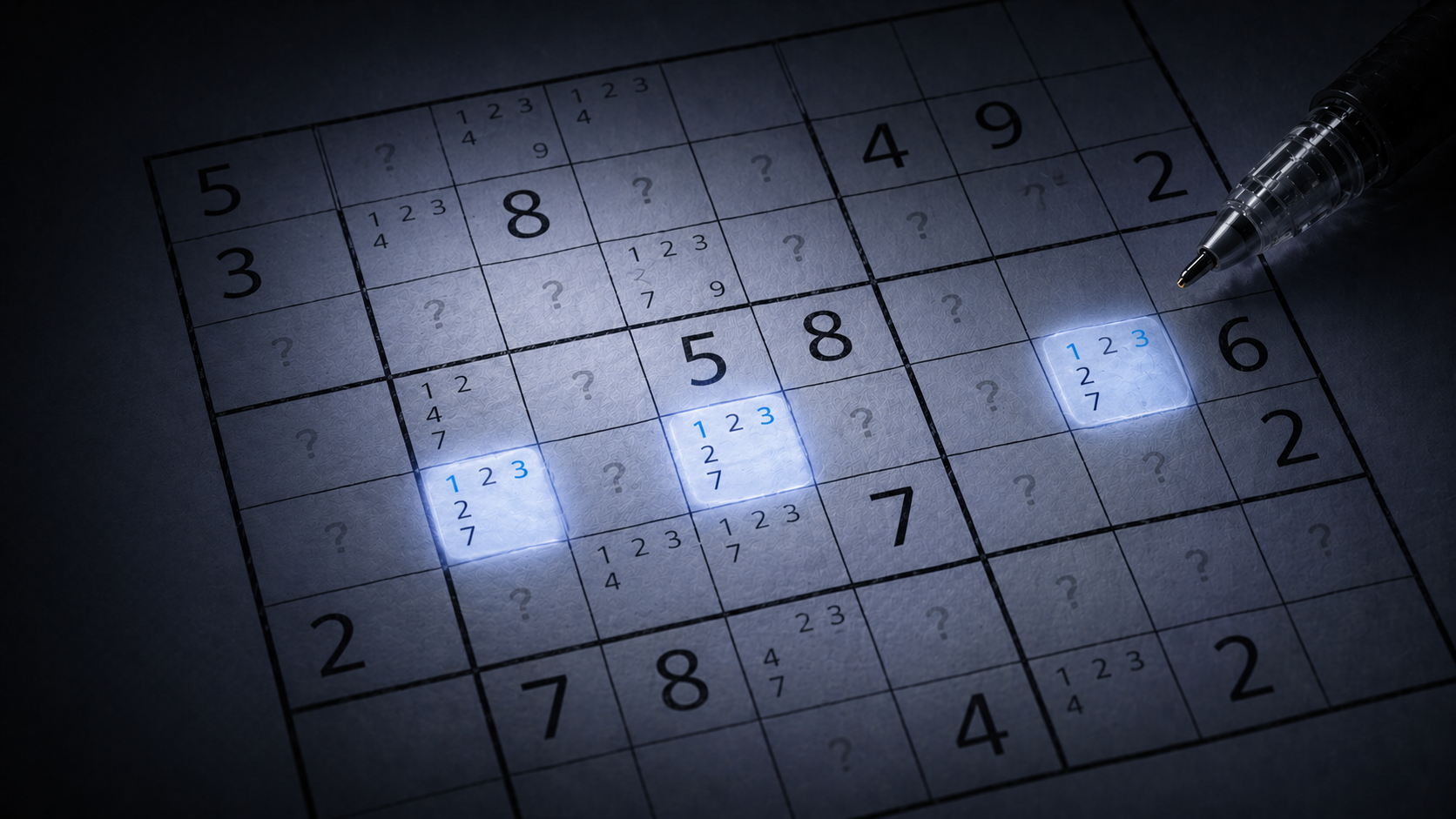
By now, there are countless strategies that can help you solve even very hard Sudoku puzzles with confidence. Hidden Singles are also among the techniques that can have a major impact on your Sudoku game. They may seem subtle, but they are often the key to breaking through stubborn dead ends. While Single Candidates catch your eye right away, Hidden Singles hide within the structure of the grid. Only players who already know exactly what they’re looking for will find these helpful and surprisingly complex special cases. If you want to call yourself a Sudoku pro, you first need to learn how to find Hidden Singles in the number chaos of a Sudoku puzzle. Once you do, every path to the solution becomes much easier.
Sudoku at Zaphira Games
Even when you play Sudoku online at Zaphira Games, focus and patience matter most. Since a timer runs in the background, many players get stressed and start clicking too quickly, which can easily lead to mistakes. It’s incredibly frustrating to have a mistake counted against you just because you accidentally clicked next to the digit you meant to choose in a rush, causing the wrong one to land in the square. Remember, at Zaphira Games, the pros are at work, and you only get three mistakes per game. After that, it’s game over. So always play calmly and avoid careless mistakes as much as possible.
What a Hidden Single Is
A Hidden Single is a number that can go in only one position within a row, column, or block, even if that cell contains several candidates. The key is the difference from Single Candidates. With a Single Candidate, the cell is clear. With a Hidden Single, the number is clear. So you’re not looking for the cell that has only one possibility, but for the number that is allowed in only one spot. To use Hidden Singles and Single Candidates effectively, you need not only a sharp eye, but also the ability to shift your perspective.
Hidden Singles often disappear in the numerical flood of a Sudoku puzzle. Too many candidates, confusing areas, or a missing scan rhythm can keep you from recognizing the only possible position for a number. Especially in hard puzzles with many open cells, candidate lists can quickly look chaotic. Your eye needs to learn not only to check individual cells, but to compare entire units. That’s exactly the challenge true Sudoku fans appreciate so much.
The Path to a Hidden Single: How to Find Them Reliably
To discover Hidden Singles, you need to look at rows, columns, and blocks as complete units. You scan the units systematically, check which numbers are still missing, and compare the candidates in the individual cells. If a number appears in only one single cell, you’ve found a Hidden Single. This process is calm, analytical, and takes a bit of patience. But the more often you go through it, the faster the solution will jump out at you.
Notes for Better Visibility
Without notes, Hidden Singles are hard to spot. The small candidate numbers make it visible which options a cell has and which it doesn’t. Only with these notes can you compare which number appears just once in a unit. Notes turn the Sudoku into a transparent system where you can see logical connections that would otherwise stay hidden. For Hidden Singles, they are practically essential. The only downside is that a Sudoku grid can quickly start to look cluttered and overloaded if you write possible candidates into every square. That means even more focus is required.
Typical Patterns That Point to Hidden Singles
Hidden Singles show up especially often in nearly complete rows or blocks. When only a few numbers are missing, the number of possible candidates shrinks, and the only possible position becomes clearer. Over time, you’ll develop a feel for where a Hidden Single might be hiding. Your eye becomes trained, and you start recognizing patterns you would have missed before.
Example: A Hidden Single in Practice
Imagine a row with only three open cells left. At first, the candidate lists don’t seem very helpful. But when you look closely, the 8 appears in only one of those cells. In the other cells, the 8 is ruled out by other units where it already appears. Even though that one cell contains several candidates, the 8 is the only logical possibility there. As soon as you enter it, the entire grid changes. New eliminations appear, and the solving flow continues. That’s how effective Hidden Singles can be.
Sudoku at Zaphira Games
Here’s an important tip to avoid careless mistakes when playing Sudoku at Zaphira Games: pay attention to the game mode! Imagine you’re in notes mode, where you can enter all possible digits without risking mistakes. The pencil button is highlighted in green, and the digits in the number pad are smaller and shifted to the side of their respective buttons. These features are actually easy to spot, but if you get distracted for a moment, switch back to regular play mode, then think you’re still in notes mode and enter a number on a lucky guess, that mistake counts immediately. So always switch between game modes carefully and with full focus.
The Power of Hidden Solutions
Hidden Singles are one of the most common Sudoku techniques. They are not always easy to find, but once they appear, they are 100% clear and logical, and they are often the key to breaking through stuck situations. Once you learn to recognize them reliably, your Sudoku game will feel more relaxed and much easier to manage. After all, they pave the way for more solutions and for the use of additional techniques. You can look for Hidden Singles regardless of a puzzle’s difficulty level, but you’ll notice that they tend to appear more often in easy puzzles with many given digits, or in puzzles where many solutions have already been found. In other words, the more digits there are and the more chaotic the puzzle looks, the higher the chance that you’ll find a Hidden Single somewhere in the number flood.

