
Sudoku Is a Puzzle for Everyone
I used to think Sudoku was only for geniuses or math professors, basically not for me. So I kept my hands off it. Today I know just how wrong I was. A Sudoku pro eventually talked me into just trying an easy puzzle. And look at that, these days I can crack even the toughest grids.
That's exactly what makes Sudoku so wonderful, it's there for all of us. There are versions for beginners, advanced players, and pros, and with every puzzle you solve, your own skill grows a little more. You just have to dare to start that first Sudoku.
Looking back on how I started, I notice how many mistakes I made back then. It all could have been so much simpler. So you don't repeat those mistakes and find the perfect way in right away, today I'm sharing my most important tip, the one I learned after solving more than 50 Sudoku puzzles.
The Rule of Numbers 1 Through 9
Solving Sudoku comes down to one rule. In every row, every column, and every 9x9 block, the numbers 1 through 9 must and can only appear exactly once each. If a number shows up twice within any of those 9-cell units, you've made a mistake. That's the basic principle of Sudoku. To work out the correct numbers, you only have the numbers already filled in from the start to go on. From there, you keep deriving further solutions until the entire grid is correctly filled with the numbers 1 through 9.
Let the Puzzle Rest for a Moment When You're Stuck
The biggest mistake Sudoku players make is getting stuck in a loop. You stare at the same grid for minutes, sometimes even hours, desperately hunting for that one number that's supposed to unlock the whole puzzle like a chain reaction. But that's not how Sudoku works. Scanning the same rows and columns over and over gets you nowhere except frustration and giving up.
If you notice you've been going over the grid forever without finding a solution, only a break will help. Look out the window, take a breath, maybe go for a short walk, whatever it takes to give your brain and your senses some new input. Eating a piece of chocolate and really paying attention to the sweet taste can help too. Same with lighting a scented candle, taking in the smell, and feeling the warmth of the flame. Get some distance from the chaos of numbers in your head. Hit reset on your brain, and after a few minutes, you'll come back to the puzzle with fresh energy. With a clear head, you'll either find the solution right away or be ready for a smart change in strategy.
You're Using a Digital Pencil, Not a Pen
Pressure creates counter-pressure, in Sudoku too. The more pressure a player puts on themselves, the more stressed they get when the aha moments don't come, the bigger and stronger their mental block grows. Once that block sets in, the round is pretty much lost. That pressure comes from the fear of mistakes, from forced perfectionism. And honestly, that mindset is outdated. Back when you solved a Sudoku in the newspaper with a pen, mistakes really could become a real problem. At some point the whole grid felt crossed out and overwritten until you couldn't read anything anymore, and you had to give up on that puzzle. And then you'd have to wait until the next morning's paper arrived for a fresh shot at solving one correctly.
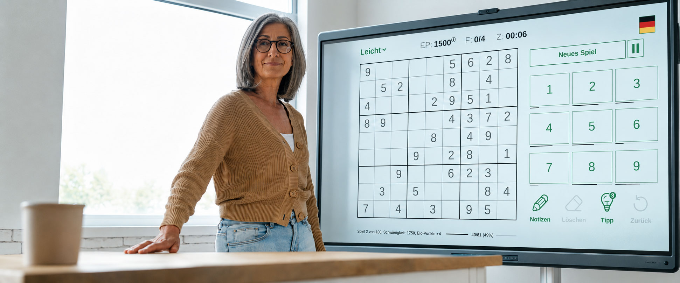
But these days, you solve your Sudoku for free online on the zaphira.games playground, and that changes everything. Numbers entered by mistake can be erased without a trace, same with the numbers you jot down in notes mode. You can test out every possible number in the puzzle without the grid ever turning into chaos. So here's my biggest tip: lose the fear of a messy grid full of mistakes, because it's simply unfounded. Remind yourself, you get countless chances, you're using a digital pencil, not a pen.
Look for "Hidden Pairs" and "Naked Pairs"
When simple elimination or just scanning rows and columns stops getting you anywhere, you need to take it a step further and use what are called "hidden pairs" and "naked pairs." That sounds complicated, but it's actually simple, and both are among the most effective strategies for getting a seemingly unsolvable Sudoku moving again.
A "hidden pair" means two specific numbers can only go in the same two cells within a block, row, or column, and nowhere else. That means even if you can't place them directly yet, you can cross out every other possibility in those two cells. So if, say, only the numbers 4 and 6 are possible in two neighboring cells within a block, you know no other numbers can go there. Which number lands where doesn't matter yet, but you've already ruled out every other option.
A "naked pair" is the exact opposite: two cells contain only the same two candidate numbers, for example only a 2 and a 5, within a row, column, or block. That combination tells you the 2 and the 5 belong exactly there, even if it's not yet clear in which order. The key advantage is that you can now cross out the 2 and the 5 as possibilities in every other cell of that row, column, or block. These logical deductions push you a big step further into the puzzle, and they're my go-to tip whenever you need a more refined strategy for especially tricky Sudokus.
Guessing Isn't a Solution, Logic Is
Out of stubbornness and frustration, many players eventually make the mistake of just guessing. A "eh, I'll just try it" almost always ends up scrambling the grid. And if you then keep solving with a possible mistake already in place, you'll notice the Sudoku doesn't add up, and suddenly two identical numbers show up in the same column. In a moment like that, out of pure frustration, a phone has been known to go flying against a wall. Obviously, that should be avoided, and it's actually pretty simple to do. If you play free Sudoku on zaphira.games, every mistake gets marked in red immediately, and you can erase it right away. With online Sudoku, there's no way a puzzle won't add up because of some error. That function matters so much because it can always happen that you accidentally tap the wrong number button. A mistake like that would be doubly annoying if it went unnoticed. Luckily, that can't happen on zaphira.games. If you're someone who gets frustrated fast when a puzzle turns out to have an error at the end, I'd recommend sticking to zaphira.games for all your Sudoku solving from now on.
Sudoku in Different Difficulty Levels
The zaphira.games playground has Sudoku puzzles waiting for beginners, advanced players, and pros. Choose between Sudoku Easy, Sudoku Medium, Sudoku Hard, Sudoku Very Hard, and Sudoku Expert. You can also start easy and gradually work your way up to the harder puzzles. You can change the difficulty level anytime using the button in the top left. To play the higher difficulty levels, Sudoku Very Hard and Sudoku Expert, you'll need to sign up for zaphira Plus.
Aim Too High, and You'll Fall Just as Hard
For whatever reason, plenty of Sudoku players jump straight for the hardest version right from the start. That's the definition of misplaced pride, and it usually leads to some serious overestimating of your own skills. A beginner who dives straight into the hardest Sudoku variant rarely finds the solution on their own and quickly loses all the fun in the game. And that whole drama is so easy to avoid. Be honest with yourself and start with easy puzzles first. Even if you're already an experienced player, on a playground that's new to you, you have no idea how the difficulty levels are actually calibrated, and you need to get a feel for that first. The worst that can happen is a puzzle turns out too easy for you. So what? Solve it in record time and move on to a trickier one. Better to start low and work your way up than start high and take a hard fall.
The Single Most Important Sudoku Tip
There's plenty to keep in mind if you want to make puzzling as easy, relaxed, and enjoyable as possible. By now I've solved more than 50 Sudoku puzzles, some in just a few minutes, others took hours. If I could only pass on one single tip from all of that, it would be this: never make the mistake of treating Sudoku like a race.
Let yourself get rushed by the clock, and you lose sight of the logical connections. Think too tensely, and you block your own thinking. Sudoku isn't about forcing the solution. It reveals itself on its own once you approach the game patiently, with structure, small breaks, and a clear head.
So: ignore the timer, don't let stress or ambition drive you. Pick up that digital pencil instead, take notes, try out combinations, and give yourself a breather here and there.
That's my biggest takeaway from more than 50 puzzles: you don't win at Sudoku with pressure, you win with a calm mind.